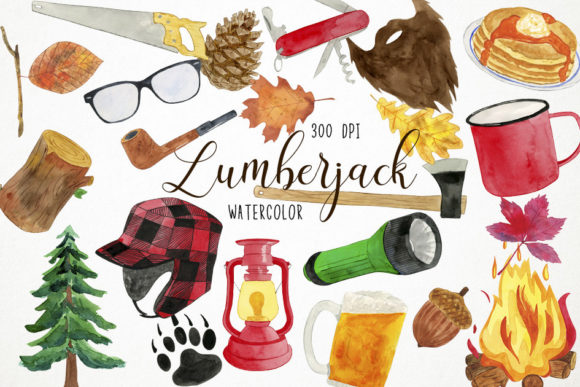
Watercolor Lumberjack Clipart: A Rustic Toolkit for Authentic Branding
The Visual Character of This Collection
There’s something undeniably honest about watercolor art. It bleeds, it bleeds a little outside the lines, and it carries the slight imperfections of a human hand. This Watercolor Lumberjack Clipart set captures that authenticity perfectly. The 23 hand-painted elements aren’t just digital files; they’re a curated mood. You’ll find classic forestry symbols—think sturdy axes, flannel patterns, and pine trees—rendered with a soft, textured watercolor wash. The color palette leans into earthy, muted tones: deep forest greens, warm browns, creamy off-whites, and occasional pops of classic red or burnt orange. This isn’t a sterile, vector-based set. The personality here is warm, rugged, and approachable. It feels handmade, which in a world of polished digital graphics, is a significant asset. The style avoids looking overly cute or cartoonish, making it versatile enough for both masculine-leaning and gender-neutral applications.
Where These Elements Truly Shine
Understanding where a design asset works best is about matching its personality to the project’s needs. The Watercolor Lumberjack Clipart isn’t for a fintech startup’s annual report, but it’s a powerhouse for projects that require warmth, tradition, and a touch of the outdoors. Let’s break down its real-world applications.
For Branding and Commercial Projects
Small businesses, especially those in artisanal food, craft brewing, outdoor recreation, or rustic wedding planning, will find this clipart invaluable. It can form the core of a brand identity for a brewery, a boutique jerky company, or a mountain lodge. Use a single, strong element like the axe or a tree as a simplified logo mark. The transparent PNGs make layering over different backgrounds a breeze for packaging design—imagine a subtle flannel pattern behind a product name on a coffee bag or hot sauce label. For social media graphics, these elements can be used to create consistent, themed posts that tell a story. A series of Instagram stories for a camping brand could use different clipart pieces as visual anchors, creating a cohesive and recognizable feed.
For Digital and Editorial Design
Bloggers and content creators focused on topics like DIY projects, gardening, hunting, or even cozy lifestyle themes can use these graphics to elevate their web design and editorial design. A featured image for a blog post on “Building a Backyard Fire Pit” gains immediate visual context with a watercolor axe or log graphic. They’re perfect for creating custom Pinterest pins that stand out in a sea of stock photography. In digital scrapbooking, the elements can anchor layouts for family camping trips or outdoor adventures, adding a tactile, artistic quality that generic stickers lack.
For Personal and Craft Projects
Don’t underestimate the power of personal use. These PNGs are ideal for creating custom invitations—especially for a lumberjack-themed baby shower or a rustic wedding. They can be used in printed materials like greeting cards, or even as design elements for custom t-shirts or tote bags using print-on-demand services. The high 300 DPI resolution ensures the watercolor texture remains crisp and beautiful in print, which is a critical detail for any physical product.
Making It Work: Practical Guidance for Designers and Creators
Having a great asset is one thing; using it effectively is another. Here’s how to integrate this Watercolor Lumberjack Clipart into your workflow with professionalism.
Evaluate Fit and Avoid Forced Themes. First, audit your project. Does the core message align with rusticity, craftsmanship, nature, or tradition? If you’re designing for a law firm, this isn’t the right tool. But for a local woodworking shop? It’s perfect. The goal is to enhance your message, not distract from it with a mismatched aesthetic.
Master Font Pairing. This is where many projects succeed or fail. The handmade, organic nature of these watercolor elements demands a typeface that complements without competing. A heavy, overly decorative script font might clash. Instead, consider pairing them with a clean, sturdy sans serif font for body text (like a classic grotesque or geometric sans) to ensure readability. For headlines, a strong serif font with a bit of character (like a slab serif) or a handwritten font that’s more structured and legible than a casual script can create a beautiful, balanced hierarchy. The key is contrast in style, not in chaos.
Consider the Commercial Licensing. The listing mentions instant download, but always double-check the license provided by the seller. For entrepreneurs and small business owners, understanding whether the license covers commercial use is non-negotiable. Most reputable clipart sets for designers include a commercial license, allowing you to use the elements in products you sell, like on Etsy or in client work. This transforms the set from a personal scrapbook asset into a professional design asset for your toolkit.
Test and Refine Your Visual Hierarchy. With 23 elements, you have variety. Don’t use them all at once. Select one or two hero elements to anchor your design. Use a subtle pattern (like the flannel) as a background texture, and perhaps a smaller icon for supporting details. This creates a clear visual hierarchy, guiding the viewer’s eye exactly where you want it. The watercolor texture itself can influence readability if placed behind text, so always test legibility and consider adding a solid or semi-transparent overlay between the graphic and your copy.
Ultimately, this Watercolor Lumberjack Clipart is more than just a collection of images. It’s a ready-made aesthetic toolkit. Used thoughtfully, it can infuse a project with personality, tell a richer story, and create a memorable brand identity that feels both authentic and professionally crafted. The value lies not just in the hand-painted quality of the graphics, but in the cohesive world they help you build for your audience.